Ashwagandha, rhodiola, holy basil, reishi, cordyceps, and lion's mane each solve a different stress problem; this guide compares the six most-studied adaptogens by what they actually address, not by hype.
- Ashwagandha has the most human trial data on stress and cortisol of any adaptogen.
- Rhodiola rosea works fastest for acute mental fatigue and burnout, often within a single dose.
- Holy basil (tulsi) is the most budget-friendly daily adaptogen with no reported sedation risk.
- Reishi mushroom targets stress-driven sleep disruption rather than daytime anxiety.
- Cordyceps and lion's mane fill narrower roles: energy crashes and stress-related brain fog, respectively.
Why this matters
Adaptogen is a marketing word before it's a pharmacology word, and the supplement aisle is crowded with blends that mix six herbs at doses too low to match any published study. The herbs that actually move cortisol, HPA-axis regulation, or subjective stress scores in human trials are a short list: six, realistically. Picking the wrong one for your symptom (say, a stimulating rhodiola dose taken at night for insomnia) wastes money and can backfire. This guide sorts by symptom, not by brand.
Raw Revelations sells organic adaptogen and mushroom powders built around several of these same herbs, and the criteria below apply whether you buy from Raw Revelations or anywhere else.
What makes a good adaptogen supplement for stress
- Clinical evidence at the actual dose used: a study on 600mg means nothing for a product delivering 100mg.
- Standardization to a marker compound: withanolides for ashwagandha, rosavins for rhodiola, triterpenes for reishi.
- Onset speed: some adaptogens (rhodiola) act within hours; others (ashwagandha, reishi) need 4-8 weeks of daily use.
- Stimulant-free, non-habit-forming profile: true adaptogens don't cause a crash or dependency.
- Organic sourcing and third-party testing: heavy metal contamination is a documented issue in imported ashwagandha and reishi.
- Compatibility with your routine: a powder you'll actually take daily beats a capsule that sits in the cabinet.
At a glance: adaptogen comparison table
| Adaptogen | Best for | Standout feature | Key limitation |
|---|---|---|---|
| Ashwagandha | Overall stress and cortisol | Most human trial data of any adaptogen | Can cause drowsiness in higher doses |
| Rhodiola rosea | Mental fatigue and burnout | Fast-acting, often felt same-day | Can feel stimulating late in the day |
| Holy basil (tulsi) | Budget daily stress support | Gentle, no reported sedation | Milder single-herb effect than ashwagandha |
| Reishi mushroom | Stress-related sleep issues | Calming triterpenes, taken in the evening | Slow onset, needs weeks of consistency |
| Cordyceps | Stress-linked energy crashes | Supports sustained energy without caffeine | Not sedating; wrong pick for anxiety at night |
| Lion's mane | Stress-related brain fog | Cognitive-support mushroom, non-sedating | Doesn't lower cortisol directly |
1. Ashwagandha: the most-researched option for everyday stress
Ashwagandha (Withania somnifera) has more published human trials on stress and cortisol than any other adaptogen, typically using standardized root extracts like KSM-66 or Sensoril at doses in the 300-600mg range taken daily for 6-8 weeks. It's the default recommendation for someone who wants one herb that does the most, with the least guesswork.
Studied doses use specific extracts, so compare your product's serving against them. Ours lists its extract ratio and usage on the Ashwagandha product page.
Ashwagandha pros:
- Largest body of clinical evidence among adaptogens
- Works on both daytime stress and sleep quality
- Available as a mild-tasting organic powder, easy to blend into a smoothie
- Non-habit-forming with a well-documented safety profile at studied doses
Ashwagandha cons:
- Can cause next-day drowsiness in some people, especially above 600mg
- Not recommended during pregnancy or for those on thyroid medication without medical guidance
- Effects build over weeks, not hours
Best for: anyone starting adaptogen supplementation who wants the single most-researched option. Verdict: Buy.
2. Rhodiola rosea: for mental fatigue and burnout
Rhodiola rosea extracts standardized to 3% rosavins and 1% salidroside, dosed around 200-600mg, are the fastest-acting adaptogen on this list; several trials report measurable fatigue reduction within the same day. It's the pick for acute burnout rather than chronic background stress.
Rhodiola rosea pros:
- Noticeable effects faster than ashwagandha or reishi
- Supports mental clarity during high-workload stretches
- Well-tolerated at studied doses with no dependency risk
Rhodiola rosea cons:
- Mildly stimulating; poor choice late in the day
- Less evidence for long-term cortisol regulation compared to ashwagandha
Best for: deadline-driven burnout and mental fatigue, taken in the morning. Verdict: Buy.
3. Holy basil (tulsi): a gentle, budget-friendly daily adaptogen
Holy basil, used in Ayurvedic practice for centuries, is studied at doses from roughly 300mg to 2,000mg of leaf extract. It's gentler than ashwagandha, which makes it a lower-risk starting point for people sensitive to sedation.
Holy basil pros:
- Well-tolerated, low reported side-effect rate
- Widely available as a simple leaf extract or tea-grade powder
- No stimulant or sedative crash
Holy basil cons:
- Single-herb evidence is thinner and less consistent than ashwagandha's
- Effects are subtler, not the pick for acute stress spikes
Best for: daily maintenance stress support on a tighter budget. Verdict: Buy.
Holy basil is one of six herbs in our Adrenal Stress Ease blend, alongside ashwagandha.
4. Reishi mushroom: for stress-related sleep issues
Reishi (Ganoderma lucidum) triterpene extracts are used in the evening rather than the morning; the calming effect makes it a poor daytime energy tool but a solid fit for people whose stress shows up as trouble winding down.
Reishi pros:
- Calming profile suited to evening use
- Long history of use alongside modern triterpene-content research
- Pairs well in a stack with magnesium or holy basil
Reishi cons:
- Slow onset; expect weeks before noticing a difference
- Sourcing and extraction quality vary widely between products
Best for: stress that disrupts sleep more than it disrupts focus. Verdict: Buy.
Reishi is one of eight mushrooms in our Immunity Matrix blend.
5. Cordyceps: for stress-linked energy crashes
Cordyceps militaris and Cordyceps sinensis extracts, typically dosed between 1,000-3,000mg, support sustained energy output without the jitteriness of caffeine; useful when chronic stress has left you running on empty rather than wired.
Cordyceps pros:
- Supports energy without a stimulant crash
- Non-sedating, works well earlier in the day
- Complements ashwagandha in a stacked routine
Cordyceps cons:
- Doesn't address anxiety or sleep-related stress symptoms
- Fewer large-scale human trials than ashwagandha or rhodiola
Best for: the fatigue-and-flatness version of stress, not the anxious version. Verdict: Buy.
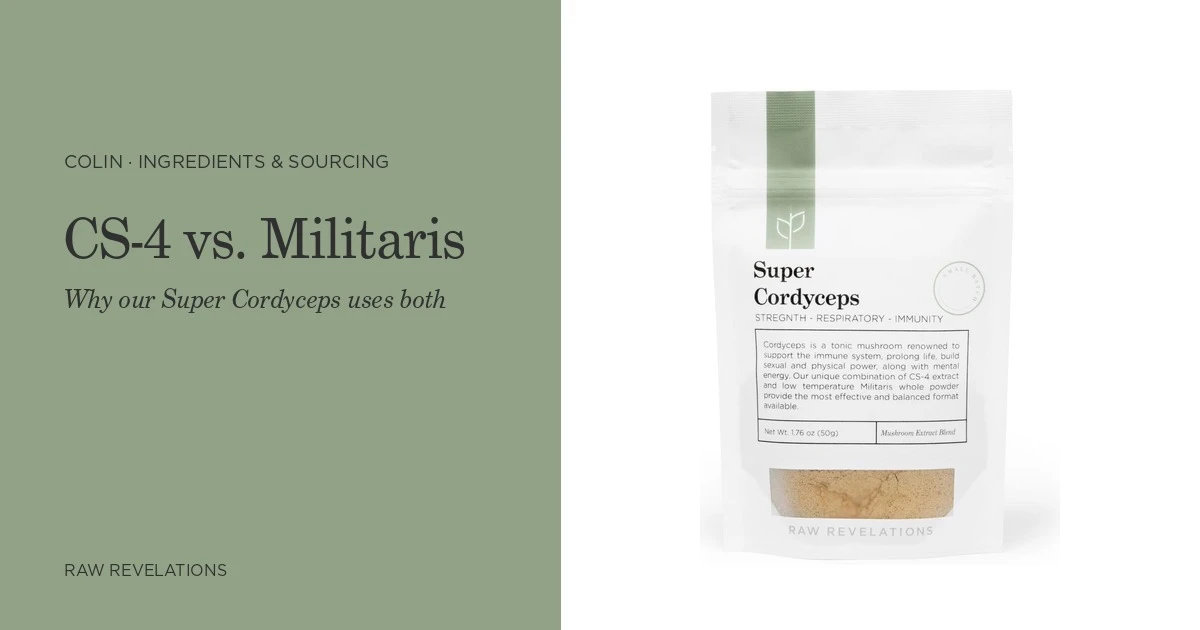
Our Super Cordyceps combines both species: a 10:1 CS-4 sinensis extract with Militaris fruiting body.
6. Lion's mane: for stress-related brain fog
Lion's mane (Hericium erinaceus) is technically a nootropic mushroom more than a classic adaptogen; it doesn't lower cortisol directly, but stress-driven brain fog is a real, distinct complaint it's studied for at doses around 500-3,000mg.
Lion's mane pros:
- Non-sedating, safe to combine with other adaptogens
- Targets cognitive symptoms other herbs on this list don't touch
- Mild taste, blends easily into powders
Lion's mane cons:
- Not a direct fix for cortisol or anxiety
- Weakest fit if your main symptom is sleep or mood, not focus
Best for: stress that shows up as fuzzy thinking rather than tension or fatigue. Verdict: Hold unless brain fog is the primary complaint.
Our Lion's Mane is a fruiting-body-only, hot-water extracted powder.
“If a stress supplement doesn't fit your sleep schedule, it's the wrong adaptogen for you, not the wrong dose.”
How we compared them
Each adaptogen was compared against the six criteria above: clinical evidence at the actual studied dose, standardization to a marker compound, onset speed, stimulant-free profile, sourcing/testing standards, and daily usability as a powder or capsule. Ashwagandha comes first because it's the only herb on this list with consistent human-trial evidence for both stress and sleep; the rest earn their spot by addressing a symptom ashwagandha doesn't cover as directly.
Shop organic adaptogen powders
Clean-label ashwagandha, reishi, and mushroom powders sourced for daily use.
Which adaptogen should you choose?
Start with ashwagandha if you want one supplement that covers general stress, cortisol, and sleep quality: it has the deepest evidence base of anything on this list. Swap to rhodiola rosea if your stress is acute and deadline-driven rather than chronic. If your main symptom is trouble sleeping, reishi in the evening beats anything you'd take in the morning. Everyone else (fatigue without anxiety, or brain fog without tension) should match the symptom to the herb above rather than defaulting to whatever's trending. For daily supplementation, organic sourcing and third-party testing matter more long-term than which single herb you pick, since low-quality ashwagandha and reishi have both shown up in heavy-metal testing reports.
For readers stacking supplements more broadly, the same sourcing standards apply to colostrum supplements, which show up in a lot of the same stress-and-recovery routines as adaptogens.
FAQ
Which adaptogen is best for my kind of stress?
Ashwagandha has the largest body of human clinical evidence on cortisol and sleep, so it suits general, ongoing stress. Rhodiola rosea is the better match for fast-acting relief from mental fatigue, and reishi for stress that disrupts sleep.
Is ashwagandha better than rhodiola for stress?
Ashwagandha has broader evidence covering both stress and sleep, while rhodiola acts faster on acute mental fatigue. Choose ashwagandha for daily maintenance and rhodiola for short-term burnout.
How long does it take for adaptogens to work?
Rhodiola can produce noticeable effects within a day, while ashwagandha and reishi typically need 4-8 weeks of consistent daily use. Cordyceps and lion's mane fall somewhere in between depending on the symptom being addressed.
Can you take multiple adaptogens together?
Yes, stacking non-overlapping adaptogens like ashwagandha with cordyceps or reishi with holy basil is common practice. Avoid stacking two stimulating options like rhodiola late in the day.
What's the best adaptogen for sleep specifically?
Reishi mushroom is the best-suited adaptogen for stress-related sleep disruption because of its calming triterpene profile taken in the evening. Ashwagandha also supports sleep quality as a secondary benefit.
Are adaptogens safe to take every day?
Most studied adaptogens, including ashwagandha and holy basil, are used daily in clinical trials lasting 8-12 weeks with a documented safety profile. Anyone pregnant, nursing, or on thyroid or immune medication should check with a doctor first.
What's the most budget-friendly adaptogen?
Holy basil (tulsi) is the most budget-friendly daily adaptogen, with a gentler effect than ashwagandha but a lower barrier to entry for first-time users. It carries a thinner clinical evidence base than ashwagandha, so expect subtler results.
Do adaptogen mushrooms like reishi and cordyceps actually work?
Reishi shows evidence for calming and sleep support, while cordyceps shows evidence for sustained energy without cortisol-lowering effects. Neither replaces ashwagandha for direct stress and cortisol regulation.
One last thing
The herb most people skip (holy basil) is also the one with the lowest reported side-effect rate of the six covered here, which makes it the safer starting point if you've never taken an adaptogen before and want to see how your body responds before moving to a stronger single herb like ashwagandha.