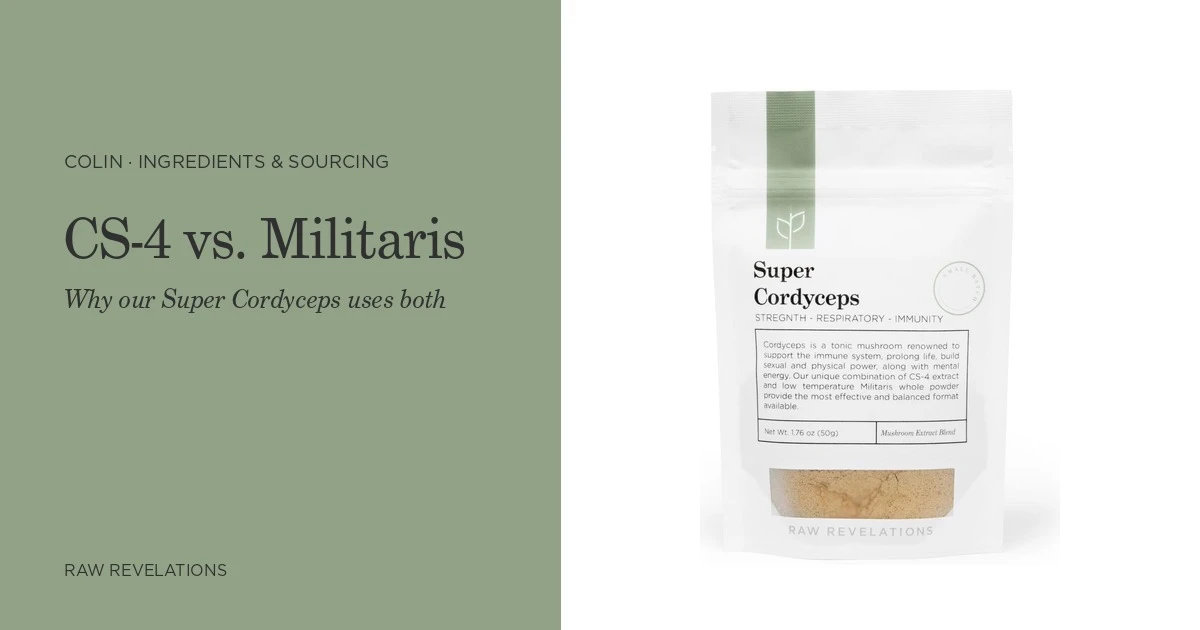
Lion's mane mushroom supplements come in five formats that behave differently in your body, and picking the wrong one wastes money on a product that barely matches the doses used in published research. Fruiting-body-only extract suits cognitive focus, dual-extract capsules suit daily consistency, and a fruiting-body powder suits smoothie stacking; mycelium-on-grain powder is the budget option, but only if you check the lab certificate first. (Raw Revelations makes the powder covered in #1.)
- Lion's mane supplements split into five formats: powder, dual-extract capsules, fruiting-body extract, mycelium-on-grain, and gummies.
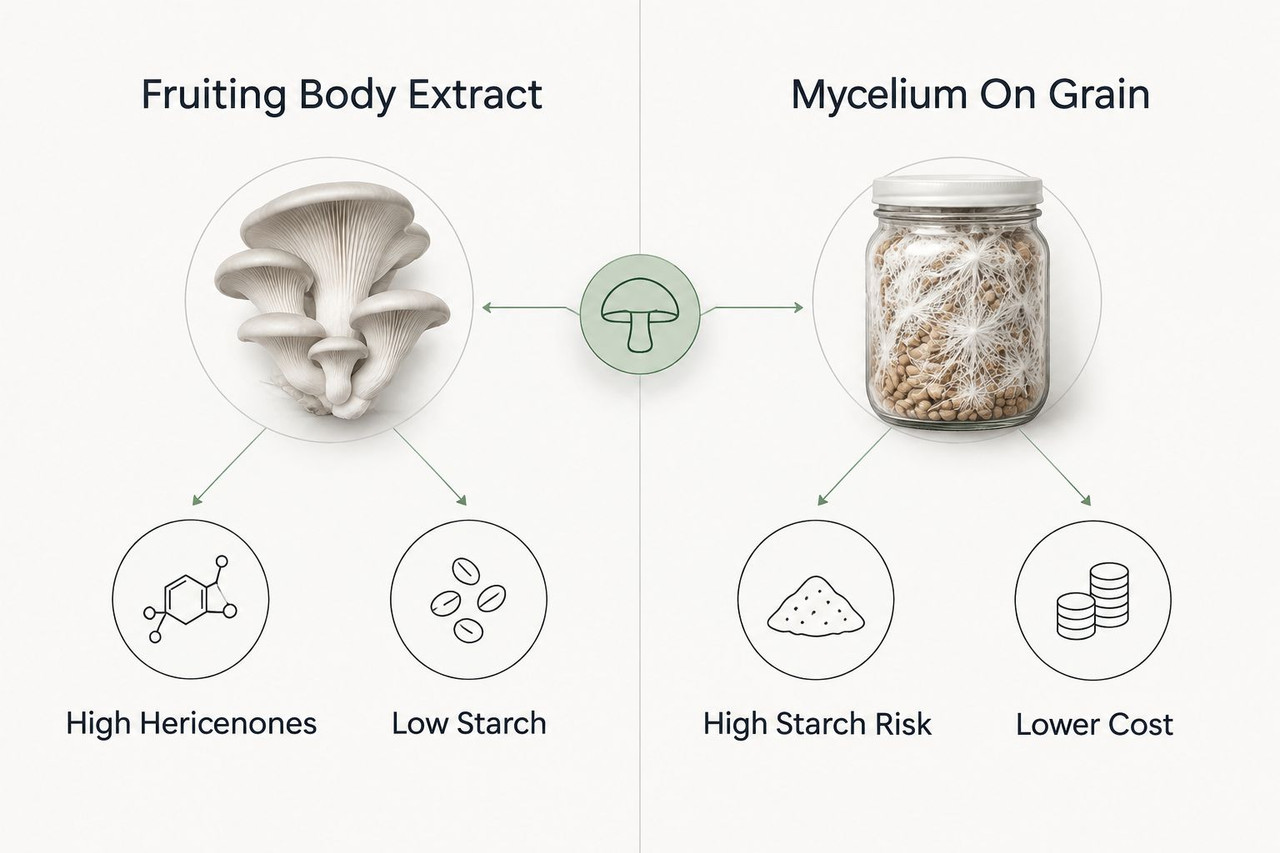
- Fruiting-body-only extract carries the highest hericenone and erinacine concentration, the compounds tied to nerve growth factor research.
- Mycelium-on-grain powder is the cheapest format but tests lowest for beta-glucan content unless the label shows a certificate of analysis.
- Published lion's mane research generally uses 500mg to 3g per day; check that against serving size before buying.
- Raw Revelations Lion's Mane is a 1:1 hot-water extract made only from organic fruiting bodies.
Why this matters
Lion's mane (Hericium erinaceus) moved from a niche mycology topic to a mainstream shelf item because of two compound classes: hericenones in the fruiting body and erinacines in the mycelium, both studied for their effect on nerve growth factor. Japanese researcher Hirotaka Kawagishi's team first isolated hericenones in the early 1990s, and that work is still cited in nearly every marketing claim you'll see on a lion's mane label.
The problem is that "lion's mane supplement" now covers five genuinely different products, and they are not interchangeable. A lion's mane powder from Raw Revelations made from organic fruiting bodies behaves nothing like a cheap mycelium-on-grain capsule, even though both say "lion's mane" on the front label. The format you pick determines how much of the actual mushroom, versus grain filler, ends up in your body.
What makes a good lion's mane mushroom supplement
- Extraction source: fruiting body versus mycelium grown on grain changes the compound concentration dramatically
- Third-party testing: a certificate of analysis showing beta-glucan and starch percentages, not just a marketing claim
- Extraction method: dual extraction (hot water plus alcohol) pulls both polysaccharides and terpenoids; single extraction gets only one
- Dose alignment: serving size should land somewhere in the 500mg to 3g per day range used in published research
- Clean-label sourcing: organic certification and no unnecessary fillers or flow agents
- Format fit: powder for stacking, capsule for convenience, gummy for taste tolerance
Lion's mane supplements at a glance
| Format | Best For | Standout Feature | Key Limitation |
|---|---|---|---|
| Raw Revelations Lion's Mane (fruiting-body powder) | Smoothie stacking | Organic, adjustable dosing | Earthy taste |
| Dual-Extract Capsules | Consistent daily dosing | Targets both compound classes | Multiple capsules needed for higher doses |
| Fruiting-Body-Only Extract | Cognitive focus | High hericenone/erinacine concentration | Fewer brands to compare |
| Mycelium-on-Grain Powder | Budget buyers | Lowest cost to produce | Starch filler risk |
| Lion's Mane Gummies | Taste-sensitive users | Easy to take, no swallowing capsules | Low extract per serving |
1. Raw Revelations Lion's Mane: a fruiting-body powder for smoothie stacking
This is a 1:1 hot-water extract made only from organic lion's mane fruiting bodies; nothing is discarded, so it stays a whole food with the solubility of an extract. It's built to blend into a smoothie, coffee, or alongside other adaptogen powders rather than to sit in a capsule, and it's the format for anyone who already has a morning blending routine and wants to control the exact dose by the scoop.
Raw Revelations lion's mane pros:
- Organic certification on the mushroom source
- Scoop-based dosing lets you dial the amount up or down
- Stacks cleanly with reishi, cordyceps, or other powders in one glass
- No capsule shell or filler between you and the mushroom
Raw Revelations lion's mane cons:
- Earthy taste that some people mask with fruit or cocoa
- No travel-ready capsule option for on-the-go dosing
- Buying reishi or cordyceps separately if you want a full stack
Best for: people who already blend smoothies daily and want precise, adjustable dosing. This is our product, so judge it against the criteria above.
Our product page suggests pairing it with Cistanche and Schisandra for a memory-focused stack.
2. Dual-Extract Lion's Mane Capsules: for consistent daily dosing
Dual extraction runs the mushroom through both a hot-water process (pulling polysaccharides like beta-glucans) and an alcohol process (pulling terpenoid compounds like hericenones and erinacines), then packs the result into a capsule. It's built for people who want the same milligram amount every single day without measuring anything.
Dual-extract capsule pros:
- Precise milligram count per capsule, no guessing
- No taste, no blending required
- Travels well for daily routines away from home
- Captures both major compound classes in one extraction
Dual-extract capsule cons:
- More expensive to produce than single extraction
- Reaching the higher end of the studied 500mg-3g range often means multiple capsules
- Less flexible if you want to adjust dose day to day
Best for: anyone who wants set-and-forget daily dosing. Verdict: Buy.
3. Fruiting-Body-Only Extract: for cognitive focus
This format skips the mycelium and grain substrate entirely, extracting only from the mushroom's fruiting body. That concentrates hericenones, the compound class most tied to nerve growth factor research going back to Kawagishi's original isolation work in the 1990s.
Fruiting-body extract pros:
- No grain filler diluting the mushroom content
- Higher concentration of the compounds actually studied for cognitive support
- Often labeled with a standardized extraction ratio (like 8:1)
Fruiting-body extract cons:
- Costs more per gram to produce than mycelium-based products
- Extraction ratio claims aren't always backed by an independent lab report
- Smaller category, so fewer brands to compare directly
Best for: focus and memory support where compound concentration is the priority. Verdict: Buy.
Browse organic lion's mane and adaptogen powders
Compare formats and stack options in one place.
4. Mycelium-on-Grain Powder: the budget option
This format grows lion's mane mycelium on a grain substrate, usually rice or oats, then dries and grinds the entire mass, mushroom and grain together, into a powder. It's the cheapest lion's mane product on any shelf, and that price comes from what's actually left in the jar.
Mycelium-on-grain pros:
- Lowest cost to produce among all five formats
- Widely available at nearly every retailer
- Milder flavor than fruiting body extract
Mycelium-on-grain cons:
- Independent lab testing has repeatedly flagged this format for high starch content and thin beta-glucan levels
- No separation between fungal biomass and the grain filler it grew on
- Weakest match to the doses used in published lion's mane studies
Best for: budget-conscious buyers willing to accept a lower compound concentration. Verdict: Hold. Check the certificate of analysis for beta-glucan percentage before buying.
5. Lion's Mane Gummies: for people who dislike capsules or powder taste
Gummies suspend a small amount of lion's mane extract in a chewable, flavored base designed to mask the mushroom taste entirely. They're the easiest format to actually remember to take, which counts for something if consistency has been your problem with other formats.
Lion's mane gummy pros:
- Easy to take, tastes like candy rather than medicine
- Good entry point if capsules or powder have put you off before
- No blending or measuring required
Lion's mane gummy cons:
- Typically far less extract per serving than capsules or powder
- Added sugar in most formulas
- Hard to reach the 500mg-3g studied range without eating several gummies at once
Best for: casual users who prioritize taste over hitting a specific dose. Verdict: Skip if dose matters to you; fine as a mild daily habit otherwise.
How we compared these formats
The comparison above weights extraction source and dose alignment with published research over convenience or packaging, because those two factors decide how much of the actual mushroom compound reaches you. A cheap format that dilutes the mushroom with grain filler sits below a pricier one that concentrates it, even when the cheap option looks like better value on the shelf.
“Ask any brand whether its lion's mane is fruiting body or mycelium-on-grain.”
Which lion's mane format should you choose?
If you want the safest default and don't want to think about it again, dual-extract capsules cover both compound classes and give you a fixed dose every day. If you already blend smoothies and want to stack adaptogens, a fruiting-body powder like Raw Revelations Lion's Mane fits that routine directly. Chasing cognitive focus specifically points you to fruiting-body-only extract; chasing the lowest cost points you to mycelium-on-grain, but only with a certificate of analysis in hand.
FAQ
Which lion's mane format should I choose?
There isn't one single best format; dual-extract capsules suit consistent daily dosing, fruiting-body-only extract suits cognitive focus, and organic powder suits smoothie stacking. Pick based on your routine, not the label alone.
Is lion's mane better as capsules or powder?
Capsules win on convenience and precise dosing; powder wins on flexibility if you already blend smoothies or want to stack with other adaptogens. Neither is objectively better across the board.
How much lion's mane should I take daily?
Published research on lion's mane generally uses doses between 500mg and 3g per day. Check your product's serving size against that range before assuming a small gummy or capsule count matches the studied amount.
Does lion's mane really help with focus and memory?
Lion's mane contains hericenones and erinacines, compounds studied since the 1990s for their link to nerve growth factor. Concentration varies enormously between fruiting-body extracts and diluted mycelium-on-grain products, so results depend heavily on which format you buy.
What's the difference between mycelium and fruiting body lion's mane?
Fruiting body is the mushroom itself, harvested and extracted directly, concentrating hericenones and erinacines. Mycelium-on-grain is the root-like network grown on rice or oats, then dried and ground with the grain still attached, which dilutes the compound concentration.
Are lion's mane gummies effective?
Gummies typically carry less extract per serving than capsules or powder, making it harder to reach the 500mg-3g range used in research. They work best as a low-commitment daily habit rather than a dose-matched supplement.
Can I take lion's mane every day long-term?
Daily use is the standard pattern in published lion's mane research, generally at doses between 500mg and 3g. Anyone with existing health conditions or on medication should confirm with a doctor before starting a daily routine.
How do I know if a lion's mane supplement is high quality?
Look for a certificate of analysis showing beta-glucan and starch percentages, organic certification, and a clear statement of extraction source (fruiting body versus mycelium-on-grain). A label without any of these is a red flag.
One last thing
The grain substrate problem is the one detail most shoppers miss entirely: a mycelium-on-grain product can legally say "lion's mane" on the front label while the jar is mostly leftover rice or oat starch from the growing medium, not mushroom. Read the certificate of analysis before the price tag; it tells you what you're actually buying.