Seven adaptogens dominate the supplement shelf (ashwagandha, rhodiola rosea, holy basil, cordyceps, reishi, panax ginseng, and schisandra), and the right pick depends on whether you're fighting cortisol spikes, afternoon crashes, or restless nights, not on which label looks cleanest.
- Ashwagandha has the broadest research base of the seven, which makes it the usual starting point for everyday stress.
- Rhodiola Rosea acts faster than most adaptogens, often within days, making it the pick for energy and fatigue.
- Reishi mushroom suits sleep and evening wind-down routines.
- Cordyceps supports oxygen utilization during exercise, making it the usual choice for endurance training.
- Raw Revelations makes ashwagandha, cordyceps, lion's mane, and schisandra powders in-house, and every supplement ingredient is lab-tested before it goes into a product; each is linked below.
Why this matters
Adaptogens are a category of herbs and fungi that help the body regulate its stress response instead of masking fatigue the way caffeine does. The term dates back to Soviet-era pharmacology research from the 1940s and 1950s, and the category has since expanded well past ashwagandha capsules into cordyceps coffee blends, reishi tinctures, and multi-herb stress-complex powders sold across every major supplement retailer.
The problem: most "best adaptogen supplement" roundups rank brands instead of the active ingredient itself, and the ingredient is what actually determines the effect you get. Ashwagandha calms; rhodiola energizes; reishi sedates; cordyceps supports endurance. Buying the wrong one for your goal wastes money regardless of how clean the label looks or how many reviews a brand has.
This guide compares the seven most common adaptogens by use case, so you can match the herb to the specific problem before you buy, whether from Raw Revelations' adaptogens or anywhere else selling organic adaptogen powders.
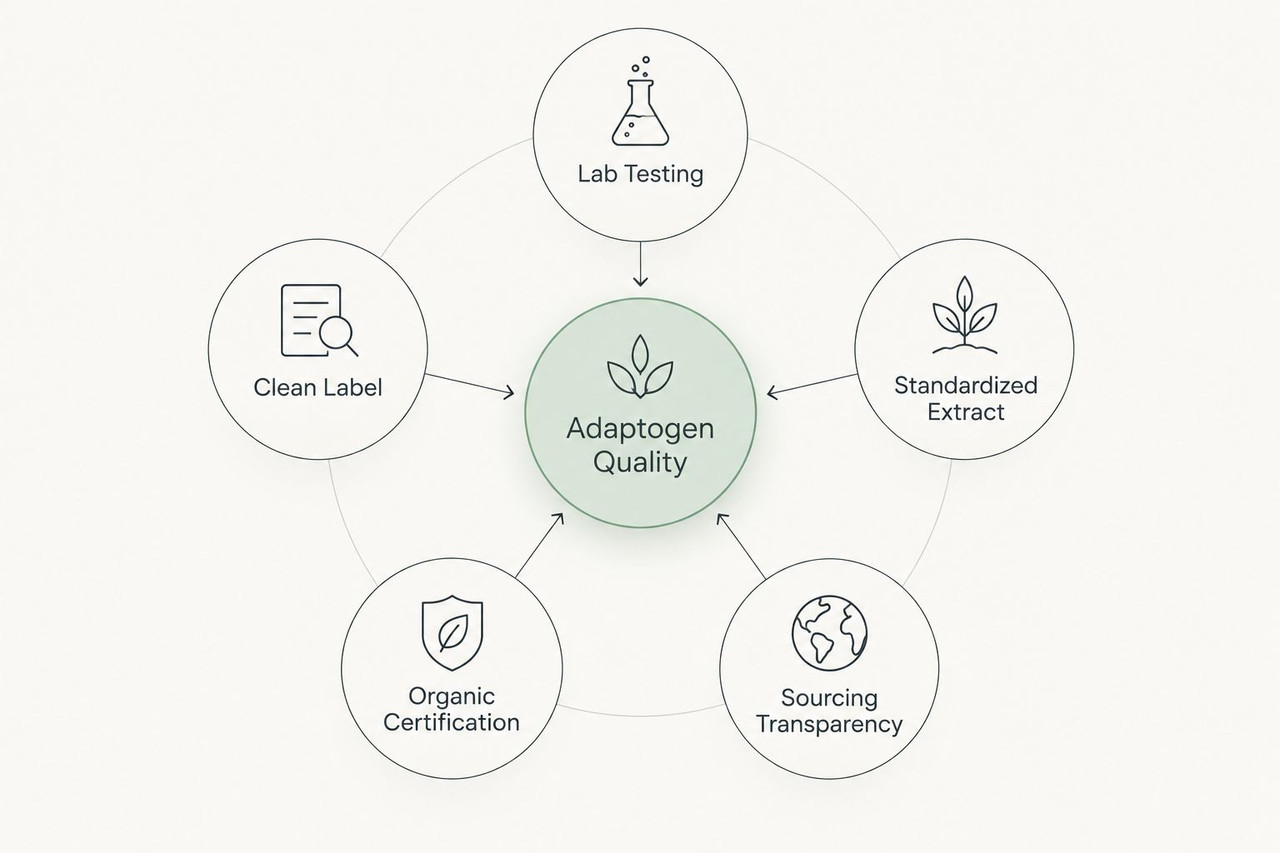
What makes a good adaptogen supplement
- Third-party lab testing for heavy metals, microbial load, and pesticide residue on every batch
- Standardized extract ratios: withanolide percentage for ashwagandha, rosavin/salidroside ratios for rhodiola
- Sourcing transparency between whole-root or whole-herb powder and isolated extract
- Organic certification and a clean label free of unlisted fillers
- Dosing form that fits a daily habit: capsule, powder, or tincture
- No proprietary blends that hide individual ingredient amounts behind one "complex" number
Adaptogen supplements at a glance
| Adaptogen | Best for | Standout feature | Key limitation |
|---|---|---|---|
| Ashwagandha | Stress & cortisol management | High-dose root extract standardized to withanolides | Can cause drowsiness in sensitive users |
| Rhodiola Rosea | Energy & fatigue resistance | Acts within days rather than weeks | Can feel overstimulating if taken late in the day |
| Holy Basil (Tulsi) | Immune support & mood | Mild enough for daily long-term use | Effects are subtler than ashwagandha |
| Cordyceps | Athletic endurance | Supports oxygen utilization during exertion | Mycelium vs. fruiting body sourcing varies widely |
| Reishi | Sleep & evening relaxation | Contains triterpenes linked to calming effects | Slow-acting; needs weeks of consistent use |
| Panax Ginseng | Cognitive focus | Stimulating effect supports mental clarity | Not ideal for anyone sensitive to stimulants |
| Schisandra | Liver support & stress resilience | Traditionally used to support liver detox pathways | Smaller research base than ashwagandha or rhodiola |
1. Ashwagandha: for everyday stress
Ashwagandha (Withania somnifera) is a root-based adaptogen used in Ayurvedic medicine for centuries, and it remains the most studied adaptogen on the market. It works primarily by helping regulate cortisol output from the adrenal glands, which is why it's the default recommendation for chronic low-grade stress rather than acute fatigue.
Ashwagandha pros:
- Broadest research base of any adaptogen sold today
- Available as root powder, standardized extract, or capsule
- Works for both stress and sleep quality with consistent use
Ashwagandha cons:
- Can cause next-day drowsiness in some users at higher doses
- Not recommended during pregnancy or alongside thyroid medication without medical guidance
- Effects build over 2-4 weeks, not a same-day fix
Best for: anyone whose main complaint is chronic stress or elevated cortisol. Verdict: Buy if stress management is the primary goal.
Our Ashwagandha is a 20:1 organic root extract; the current batch tests at 2.7% withanolides.
2. Rhodiola Rosea: for daytime fatigue
Rhodiola grows in cold climates across Siberia and Scandinavia and has a faster onset than ashwagandha: some users notice energy shifts within days instead of weeks. It's the adaptogen most associated with fighting fatigue during demanding stretches rather than long-term cortisol regulation.
Rhodiola pros:
- Faster-acting than most other adaptogens on this list
- Doesn't carry the sedative effect ashwagandha sometimes does
- Well-tolerated for daytime use
Rhodiola cons:
- Can feel mildly stimulating; avoid taking it late in the day
- Quality varies by rosavin/salidroside ratio, and cheap extracts often understate this
- Less effective for sleep-related stress than ashwagandha or reishi
Best for: afternoon energy crashes and mental fatigue during demanding weeks. Verdict: Buy for daytime energy; skip if you're sensitive to mild stimulants.
3. Holy Basil (Tulsi): for immune support and mood
Holy basil, also called tulsi, is one of the gentlest adaptogens on this list, which makes it a common entry point for people trying adaptogens for the first time. It's traditionally used to support the immune system and stabilize mood rather than deliver a noticeable energy or calm effect.
Holy Basil pros:
- Mild enough for long-term daily use without building tolerance
- Commonly available as tea, which lowers the barrier to daily consistency
- Well-tolerated alongside other adaptogens in a stack
Holy Basil cons:
- Effects are subtle compared to ashwagandha or rhodiola
- Slower to show noticeable results
- Not the right pick if you need something targeted for sleep or acute stress
Best for: first-time adaptogen users and daily immune-support routines. Verdict: Buy as a gentle daily add-on; skip if you need a stronger, faster effect.
Holy basil is one of six herbs in our Adrenal Stress Ease blend.
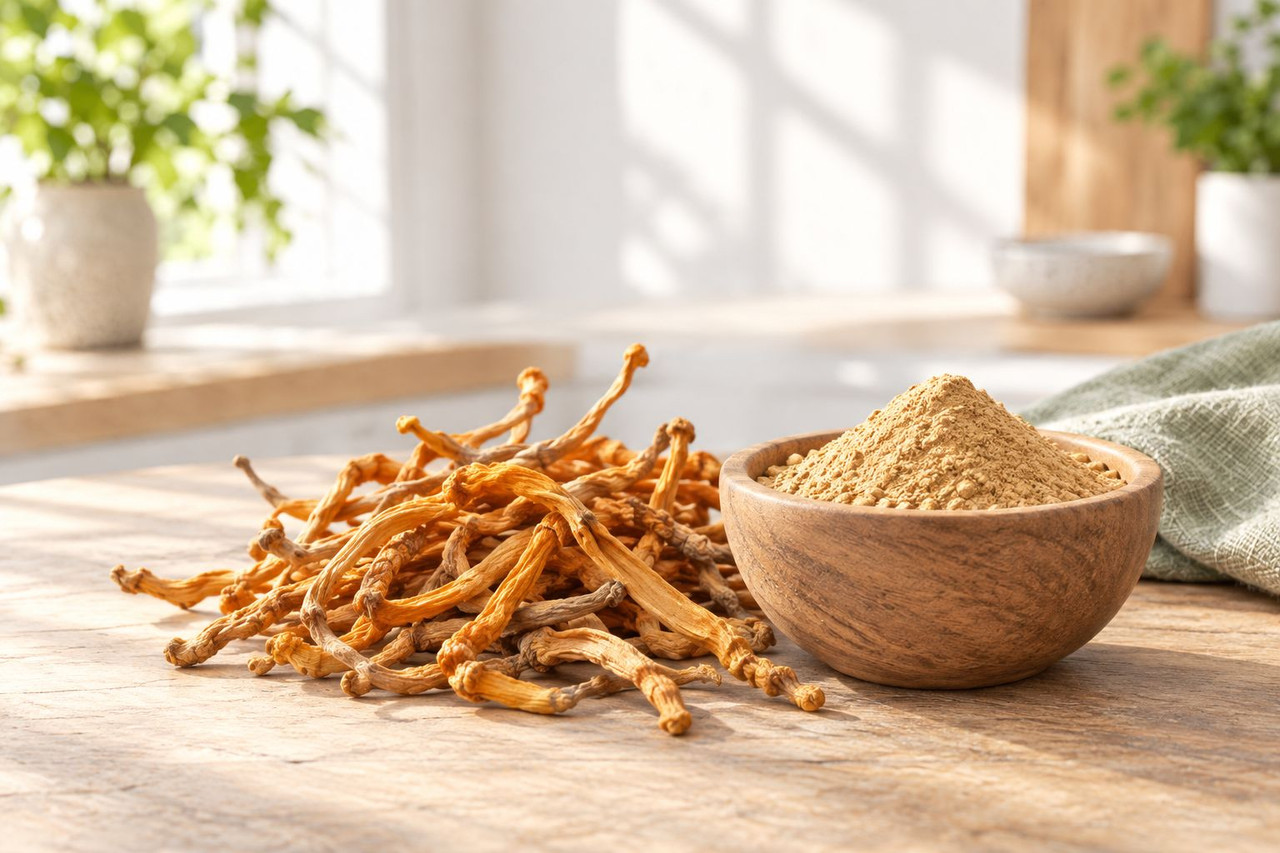
4. Cordyceps: for athletic endurance
Cordyceps is a fungus traditionally harvested at high altitude in the Himalayas, though nearly all commercial cordyceps sold today is lab-cultivated mycelium rather than wild fruiting body. It's the adaptogen most linked to oxygen utilization during exercise, which is why it shows up in pre-workout and endurance-focused formulas.
Cordyceps pros:
- Associated with improved oxygen uptake during exertion
- Stimulant-free alternative to caffeine-based pre-workouts
- Works well stacked with other adaptogens on training days
Cordyceps cons:
- Mycelium-grown and fruiting-body cordyceps aren't interchangeable in potency; check which form you're buying
- Less evidence for stress or mood benefits compared to ashwagandha
- Effects on performance are modest, not dramatic
Best for: endurance athletes and anyone training for cardio output. Verdict: Buy if athletic performance is the goal; skip if you're after stress relief.
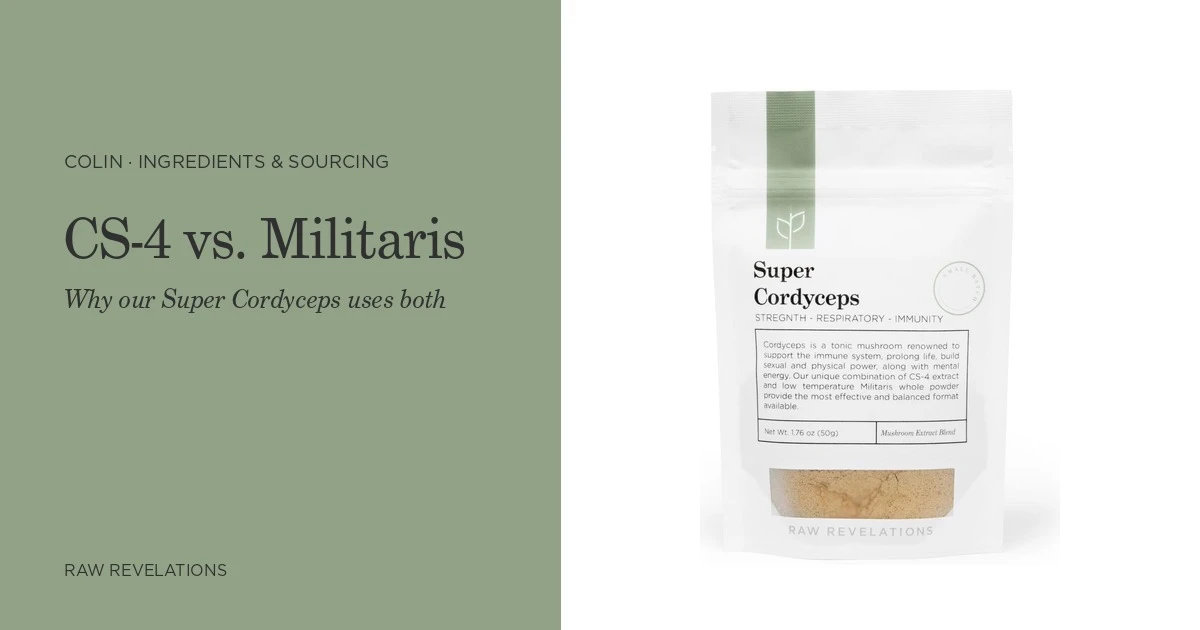
Our Super Cordyceps combines a 10:1 CS-4 extract with Militaris fruiting body.
5. Reishi: for sleep and relaxation
Reishi mushroom has centuries of use in traditional Chinese medicine as a calming tonic, and it's the slowest-acting adaptogen on this list. The triterpenes in reishi are associated with relaxation rather than sedation, which is why it's typically taken in the evening rather than as a daytime energy tool.
Reishi pros:
- Well-suited to evening routines and wind-down stacks
- Doesn't carry next-day grogginess the way some sleep aids do
- Pairs naturally with magnesium or L-theanine in an evening stack
Reishi cons:
- Slow-acting; expect several weeks before noticing a consistent effect
- Not useful for acute, same-night sleep problems
- Bitter taste in raw powder form pushes most buyers to capsules
Best for: building a consistent evening wind-down routine. Verdict: Buy for long-term sleep support; skip if you need something that works tonight.
Reishi is one of eight mushrooms in our Immunity Matrix blend.
6. Panax Ginseng: for cognitive focus
Panax ginseng is the most stimulating adaptogen on this list, closer in feel to a mild nootropic than to a calming herb like reishi. It's the pick for mental clarity and focus, and it's commonly dosed earlier in the day rather than at night.
Panax Ginseng pros:
- Noticeable effect on mental alertness and focus for many users
- Doesn't require weeks of buildup the way ashwagandha does
- Works well for short-term cognitive demands like exam weeks or crunch deadlines
Panax Ginseng cons:
- Can feel overstimulating for people sensitive to caffeine
- Not the right choice for evening use
- Interacts with some medications; check with a doctor if you're on blood thinners or stimulant medication
Best for: focus and mental clarity during demanding workdays. Verdict: Buy for cognitive focus; skip if you're already sensitive to stimulants.
7. Schisandra: for liver support and stress resilience
Schisandra berry is traditionally used in Chinese medicine to support liver function and overall stress resilience, and it has the smallest research base of the seven adaptogens covered here. It's typically used as part of a broader herbal stack rather than as a standalone stress solution.
Schisandra pros:
- Traditionally linked to liver detox support
- Mild enough to combine with other adaptogens
- Tart flavor works well in smoothies or tea blends
Schisandra cons:
- Smaller body of research than ashwagandha, rhodiola, or reishi
- Effects are harder to isolate since it's rarely used alone
- Not a strong standalone pick for acute stress or sleep
Best for: rounding out a broader adaptogen stack with liver support. Verdict: Hold. Pair it with ashwagandha or rhodiola rather than using it alone.
Shop our Schisandra.
How we compared them
Each adaptogen above is measured against the six criteria listed earlier: lab testing, extract standardization, sourcing transparency, organic certification, dosing form, and label clarity. The "best for" label on each entry reflects the primary traditional and studied use case for that herb (stress, energy, sleep, endurance, focus, immune support, or liver function), not a generic stress-relief claim stretched across all seven.
Raw Revelations sells most of its adaptogens as single-ingredient powders, so you know exactly which herb you're taking, and every supplement ingredient is lab-tested before it goes into a product.
Match your adaptogen to your goal
Browse Raw Revelations' organic adaptogen and mushroom powders sorted by use case.
Which adaptogen supplement should you choose?
Default to ashwagandha if you're not sure where to start: it has the broadest research base and works for the most common complaint: chronic stress and elevated cortisol. Reach for rhodiola rosea instead if your problem is afternoon fatigue rather than baseline stress, and switch to reishi if sleep, not energy, is the issue.
Athletes training for endurance should look at cordyceps before anything else on this list. Athletes stacking recovery supplements often pair cordyceps with a gut-support product like colostrum to cover both stress resilience and recovery in the same routine. Anyone building a broader wellness stack can layer holy basil or schisandra underneath a primary pick without much risk of interaction. Raw Revelations carries ashwagandha, cordyceps, and schisandra on their own, reishi in Immunity Matrix, and holy basil in Adrenal Stress Ease; rhodiola and ginseng aren't part of our line.
FAQ
Which adaptogen should I start with?
Most people start with ashwagandha because it has the broadest research base and addresses the most common complaint: chronic stress and elevated cortisol. Rhodiola rosea and reishi are better matches for energy and sleep specifically.
Is ashwagandha better than rhodiola for energy?
No. Rhodiola rosea works faster and is better suited to daytime energy and fatigue resistance, while ashwagandha is better for baseline stress and cortisol regulation. Many stacks use both, rhodiola in the morning and ashwagandha at night.
Can you take multiple adaptogens together?
Yes, stacking adaptogens like ashwagandha with schisandra or holy basil is common practice, since each targets a different pathway. Start with one adaptogen for two to four weeks before adding a second so you can tell what's actually working.
Which adaptogen is best for sleep?
Reishi mushroom is the adaptogen most associated with sleep and evening relaxation, though it's slow-acting and needs several weeks of consistent use rather than a single dose before bed.
Do adaptogen supplements actually work?
Adaptogens like ashwagandha and rhodiola have the most research support among the seven herbs and fungi in this category, while others like schisandra have a smaller evidence base. Effects vary by individual and by which specific adaptogen you're taking.
How long does it take for adaptogens to work?
Rhodiola can produce noticeable effects within days, while ashwagandha and reishi typically take two to four weeks of consistent daily use before effects become clear. Adaptogens aren't designed for same-day results.
Is cordyceps a good pre-workout adaptogen?
Cordyceps is the adaptogen most associated with oxygen utilization during exercise, making it a stimulant-free alternative to caffeine-based pre-workouts for endurance training.
What should I look for on an adaptogen supplement label?
Check for third-party lab testing, a standardized extract ratio like withanolide percentage for ashwagandha, organic certification, and a label that lists individual ingredient amounts instead of a hidden proprietary blend.
One last thing
Adaptogens don't work like stimulants or sedatives; they're defined by helping the body's stress response normalize in either direction, which is why the same herb, like ashwagandha, shows up in both "energy" and "calm" product categories depending on the person. If a label claims one adaptogen fixes stress, sleep, energy, and focus all at once, that's a marketing shortcut, not how the biology works; pick the herb that matches your specific problem instead of the one with the longest ingredient list.